
Section C, story 14 min read
Chicago weather is shaped by Lake Michigan, and that makes forecasting tricky. In winter, a band of snow off the lake can bury one neighborhood while another a short drive away stays dry. Local TV and radio forecasters spend a lot of airtime on these details, and the National Weather Service runs its own radio network for warnings. Here is how to use each source.
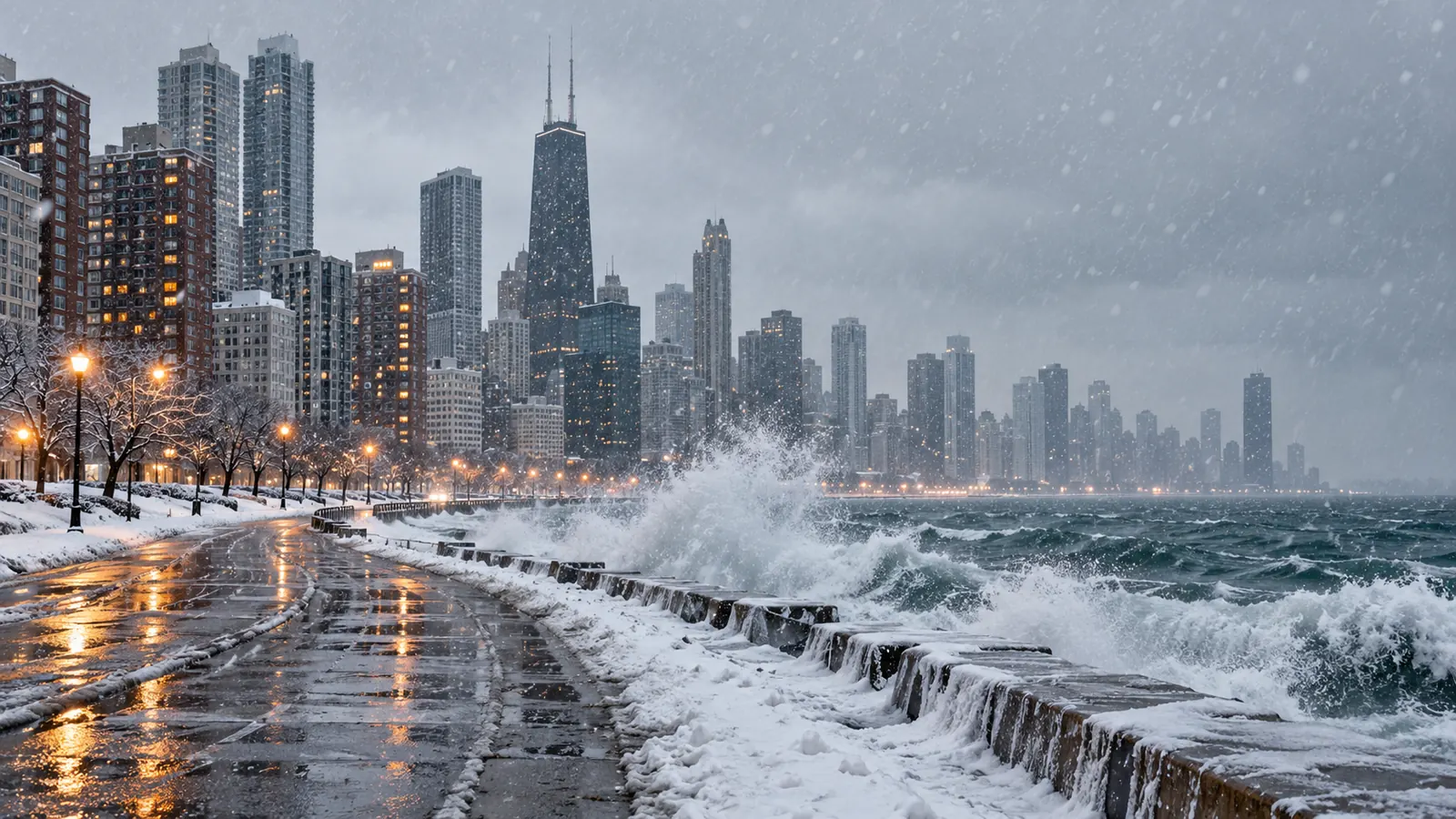
What lake effect snow is
The National Weather Service explains that lake effect snow is common across the Great Lakes region during late fall and winter. It happens when cold air, often originating from Canada, moves across the open waters of the Great Lakes. The air rises, clouds form and grow into a narrow band that can produce 2 to 3 inches of snow per hour or more. Wind direction is a key part of the forecast, because it decides which areas end up under the band.
The Weather Service adds that heavy snow may be falling in one location while the sun is shining just a mile or two away. For Chicago viewers that is the reason a forecast for the whole metro area can feel wrong for your street. When a lake effect event is expected, watch for forecasts that name specific counties or lakefront areas rather than the region as a whole.
Who forecasts for Chicago
The official forecasts and warnings for the Chicago area come from the National Weather Service office for Chicago. Local TV and radio stations build their own forecasts on top of that data and pass on the Weather Service’s watches and warnings. CBS Chicago, for example, promotes its First Alert Weather coverage, and ABC7 Chicago and NBC 5 describe weather as a core part of their coverage on their websites. For the stations themselves, see Chicago TV Channels: The Local Stations You Can Watch With an Antenna.
NOAA Weather Radio in the Chicago area
NOAA Weather Radio is the Weather Service’s own broadcast network. It carries warnings, watches, forecasts and other hazard information 24 hours a day, and working with the FCC’s Emergency Alert System it also broadcasts non-weather emergencies. It needs a special receiver or a scanner, because it uses seven frequencies between 162.400 and 162.550 MHz rather than the AM or FM bands. Several transmitters run by the Chicago office cover the metro area:
| Transmitter | Call sign | Frequency (MHz) | Counties it covers (Illinois) |
|---|---|---|---|
| Chicago | KWO39 | 162.550 | Cook, DuPage, Lake |
| Lockport | KZZ81 | 162.425 | Cook, DuPage, Grundy, Kane, Kankakee, Kendall, Will |
| Crystal Lake | KXI41 | 162.500 | Boone, Cook, Kane, Lake, McHenry |
| Plano | KXI58 | 162.400 | DeKalb, DuPage, Grundy, Kane, Kendall, La Salle, Will |
| Kankakee | KZZ58 | 162.525 | Iroquois, Kankakee, Will |
| DeKalb | WNG536 | 162.550 | Boone, DeKalb, Kane, Lee, Ogle, Winnebago |
| Odell | WXK24 | 162.450 | Will and eight other counties to the south |
The table comes from the Weather Service’s transmitter data. If you live near a county line, you may be able to hear more than one transmitter; choose the one that names your county.
Setting up a weather radio
- Choose a radio with the NOAA Weather Radio frequencies and an alarm feature.
- Tune it to the nearest transmitter from the table, for example 162.550 for the Chicago transmitter.
- Program your county using its code, so the alarm sounds only for warnings that include your county.
- Put in fresh batteries as a backup and place the radio where you will hear it at night.
- Check it from time to time so you know the alarm and batteries still work.
Tip: If the radio picks up static on one frequency, try the next nearest transmitter from the table before moving the radio.
During a snowstorm
In a big snow event, the most useful information is usually local: which roads are closed, whether schools are open, how long the snow will continue. TV and radio newscasts are the place for that. All-news radio is handy in the car; WBBM Newsradio describes itself as Chicago’s all news station on 780 AM and 105.9 FM. A battery radio is the one source that keeps working if the power fails.
During summer storms
Severe thunderstorms and tornado warnings arrive faster than snow, and that is where alerts matter most. Phone alerts and the TV and radio Emergency Alert System sound automatically; a weather radio with an alarm wakes you at night. Our guide to Emergency Alerts in Chicago: TV, Radio, Phones and Weather Radio explains how those systems work and which alerts you can switch off on your phone.
Reading a forecast with the lake in mind
When forecasters mention the wind direction, it is worth paying attention. The Weather Service notes that wind direction decides which areas receive lake effect snow,. A forecast that talks about snow bands moving along the shore is telling you that your exact location matters more than usual.
The practical lesson is simple. For everyday planning, use your favorite TV or radio forecast. For warnings, rely on systems that alert you automatically: a weather radio set to your county, phone alerts and the Emergency Alert System. And when the forecast says a lake band is possible, expect the totals to vary sharply across short distances.